
Ashland Resident Lookup Record Paths
A careful Ashland one-person search starts with the record that can actually confirm the point at issue. Jackson County’s tax roll can connect an owner label to a tax lot, site address, and mailing label. A recorded deed adds party roles and a legal description. Oregon court sources can establish a party’s connection to a case, not identity from a name alone. Historic indexes can support an event or family link, while business and license files describe public affiliations rather than a private residence. Each source has a different scope, so an absence in one is not proof that a person is absent from Ashland.
| Record | What It Can Confirm | Ashland Route | Access Boundary |
|---|---|---|---|
| Property and tax roll | Owner-to-tax-lot connection, situs and mailing labels | Jackson County tax search, PDO, or JIM | Free search; mailing label is not occupancy proof |
| Recorded deed | Party role, recording event, legal description | PDO or Clerk Recording Division | PDO covers deeds from 2002 forward |
| Voter record | A voter’s own status or fields lawfully released in a list | My Vote, SOS request, or county elections | My Vote is self-service; protected information is excluded |
| Court register | Case number, party, event, and final disposition | OJD, Jackson Circuit Court, or Municipal Court | Protected, sealed, and retained-away records are unavailable |
| Historic vital index | Event and family-history lead | OHRI, Archives, OHA, or local repositories | Index is not a certificate; closures and eligibility apply |
| Business or license file | Entity role, mailing contact, or credential | SOS or the issuing board | A business contact is not a personal address |
Use the Jackson County property search when an owner or property connection is already known. Use court records when a case, court, or date is known. For a person checking their own registration, Oregon My Vote is the correct channel. A tax mailing address can differ from a physical site address, so it should never be described as proof that a named person lives there.
Note: Write down the source, search date, exact spelling, and record number before comparing any Ashland result with another record.
Ashland Court Lookup Channels
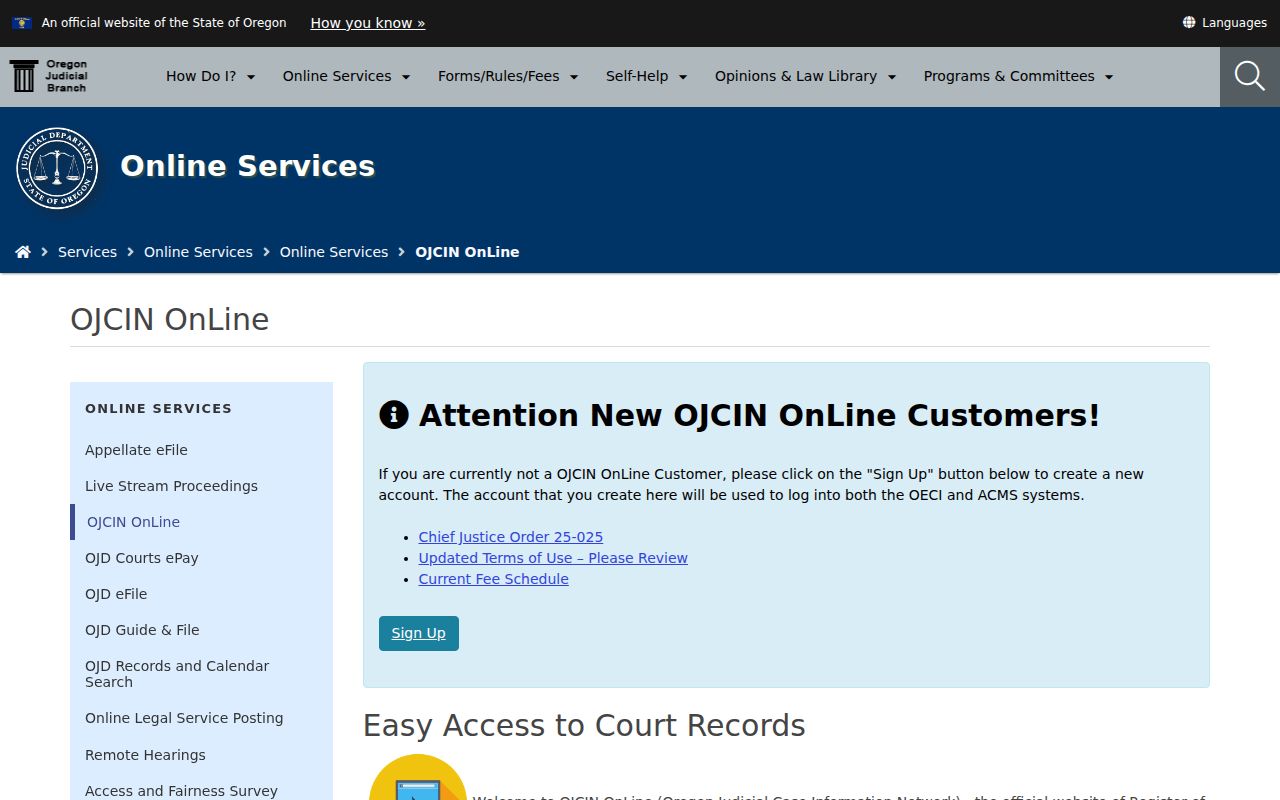
A court result can be useful in an Ashland one-person check when it anchors a name to a case number, court, date, and final outcome. The free Oregon Judicial Department search offers basic statewide circuit, tax, and appellate case information and calendars. It excludes protected categories such as adoption, juvenile, mental-health, and Violence Against Women Act matters. OJCIN Online is the registered paid channel for broader registers and judgment dockets. At the Jackson County Circuit Court lobby, public computers can provide a fuller statewide circuit-court view, subject to confidentiality rules. A docket event is a log entry, not a conclusion about a person.
The OJCIN Online access page is shown below for an Ashland court-record channel.
A free search, a paid register, a lobby terminal, and a clerk request answer different needs. Start online to identify the court and case number, then ask the holding court for the appropriate document path if the register identifies a filing worth reviewing.
Ashland Resident Lookup Court Timing
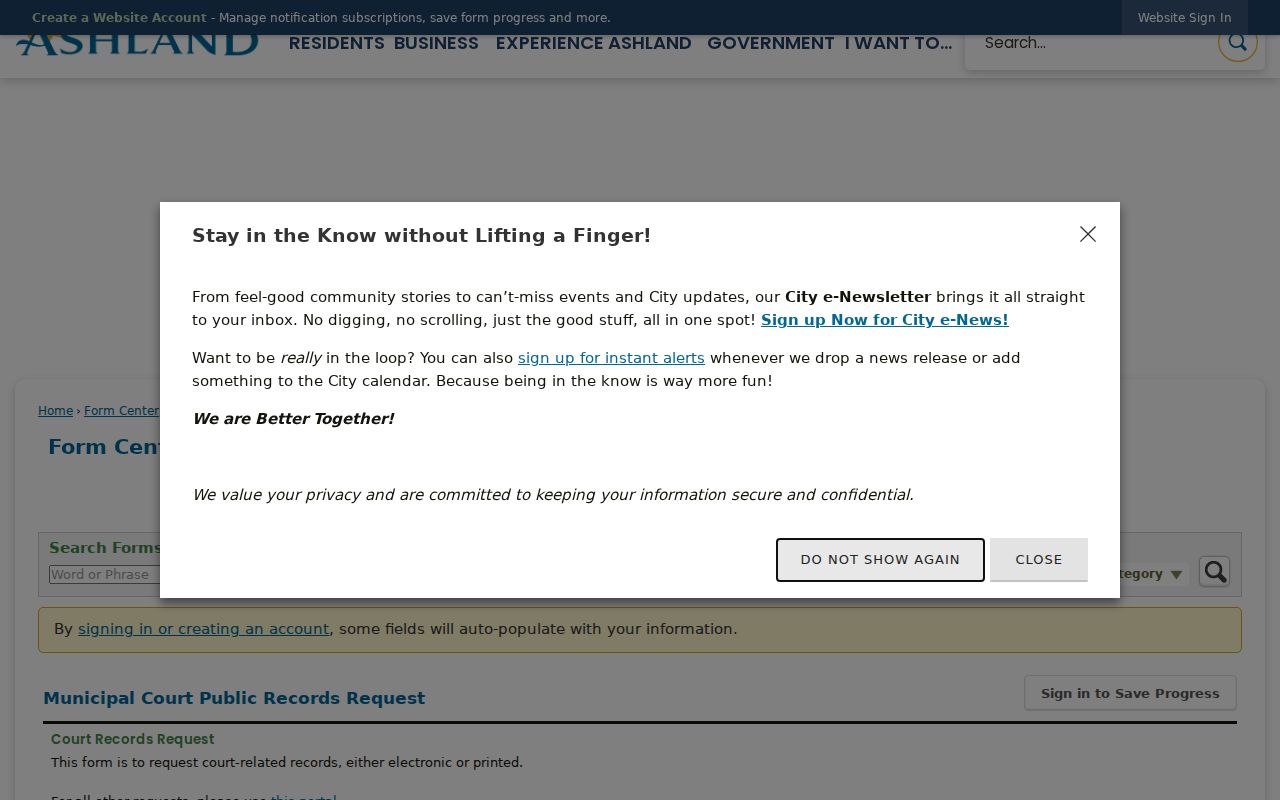
Ashland Municipal Court is the local route for city matters, not a substitute for Jackson County Circuit Court files. Its online-records page directs visitors to docket and records information, but the City warns that material may not remain available after the court’s ten-year retention period. When an online result does not provide the needed document, the municipal request form may be submitted online, in person, by fax, or by email. The City gives a five-to-seven-business-day response expectation. That local retention rule is one reason a missing Ashland court item should be treated as inconclusive.
The Ashland Municipal Court online-records page provides the city’s docket and request route.
The municipal-court request form is the documented fallback for printed city-court records.
Give the court a case number, document description, hearing date, or other specific information when possible. That makes a record request easier to route and reduces the chance of confusing a same-name case with the person being checked.
Confirming an Ashland Resident Record
Verification is the core of a responsible Ashland record check. Build a small comparison sheet with the full legal name, initials or middle name, plausible age or year, city or county, an address or map-and-tax-lot reference, a spouse or associate where the record lawfully shows one, and the date of each source. Match at least two independent source types. For example, a property record and a deed can confirm a property connection, while a historic marriage lead and the controlling volume can support a family-history question. A common surname, an initial-only entry, or a mismatch between mailing and site address is a reason to stop and check further.
- Search the property roll by owner surname or the known location, then record the exact owner spelling, site address, tax lot, and roll year.
- Check the matching recorded deed for party roles, document date, and the same legal description rather than relying on an address alone.
- Search the appropriate court channel for a case number, court, and final disposition, comparing each detail with the property timeline.
- Use an historic index only as a lead, then ask the custodian about the original record or certified-copy procedure where access permits.
- Docket
- A docket, or case register, is the court’s running list of filings, hearings, notices, judgments, and other events in one case.
- Index and image
- An index identifies a record and its reference details. An image is the underlying document, which may require a counter, request, or paid channel.
- Certified copy
- A certified copy is issued by the custodian with its official certification. It is different from a search result or informal index entry.
For older household evidence, the known Ashland directory holdings and their abbreviations belong on the Ashland city directory page; they should be paired with a date-specific property or archival source before drawing a conclusion about one person.
Ashland Record Name Checks
Namesakes are common enough to make a one-source answer risky. An OJD register can show a case number, event dates, event descriptions, party context, and a judgment or disposition entry, but it does not itself supply filed-document images. Compare court, county, and record dates before tying a name to an Ashland address. Do not turn an allegation, a routine notice, a resolved matter, or an absent result into a statement about identity. If the court has a clerical issue, ask the clerk about its correction process rather than trying to change an entry through a directory.
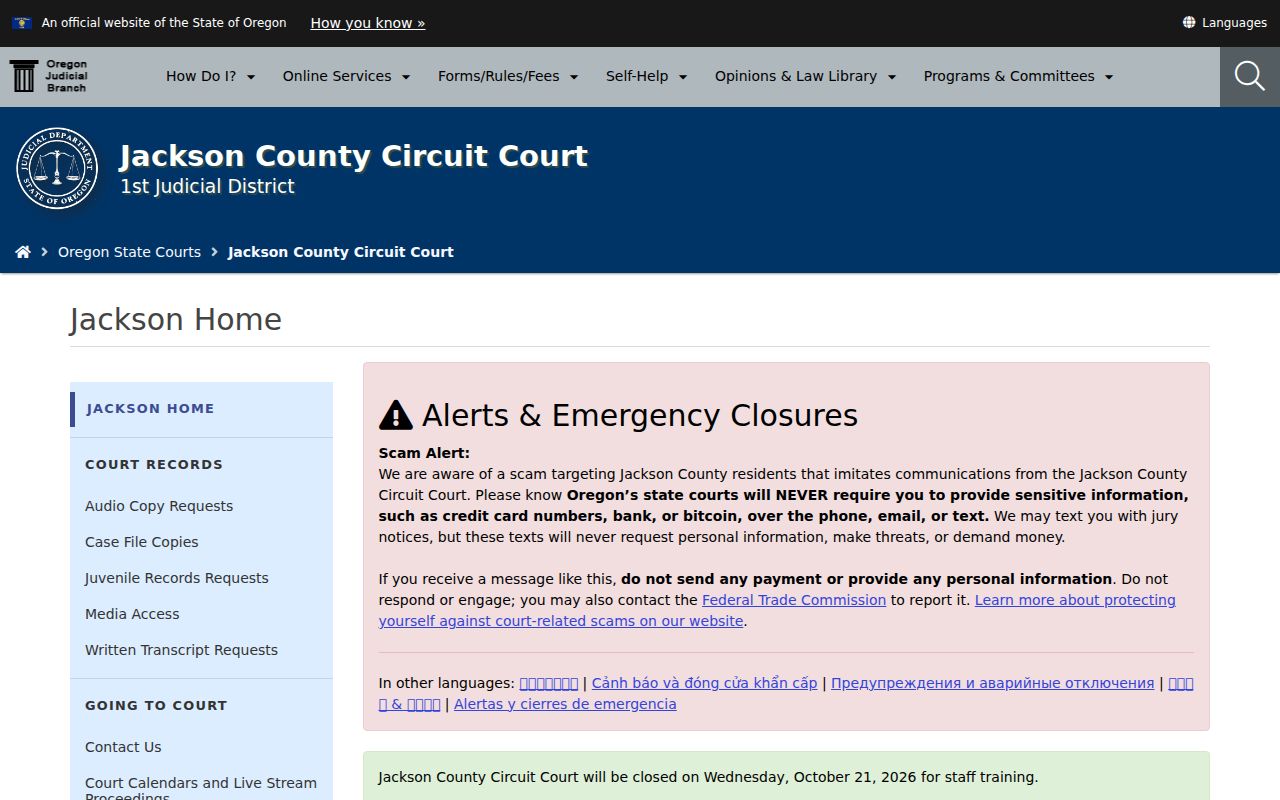
The Jackson County Circuit Court page identifies the local court that serves Ashland’s circuit matters.
Can a court hit confirm that two people are the same? No. It can supply a case context. A reliable match needs the full name and compatible court, case, date, and independently supported local details.
Ashland Historic Record Leads
Historic vital and probate material can help with an Ashland family-history question, but it is not a route to locate a living person. The Oregon Historical Records Index supports surname variations and includes Jackson collections for births, delayed births, marriages, divorces, estates, and naturalizations. Jackson’s historic marriage series runs from 1853 to 1970, while county death records run from 1904 to 1958. Those dates describe record series, not an open right to every certificate.
Oregon keeps births closed for 100 years and deaths closed for 50 years under the stated access rule. Newer certificate orders go through the Oregon Health Authority’s eligibility and identity process. OHA directs mail applicants to send a signed form, fee, identification copy, and supporting documents where needed, while online and phone orders add vendor, expedited, or identity-review charges. A county clerk can issue certified copies of recorded Jackson marriage licenses, and later divorce files follow the circuit-court route.
Note: An index can point to a date, volume, or certificate number, but the custodian decides whether a copy may be issued.
Ashland Record Request Routes
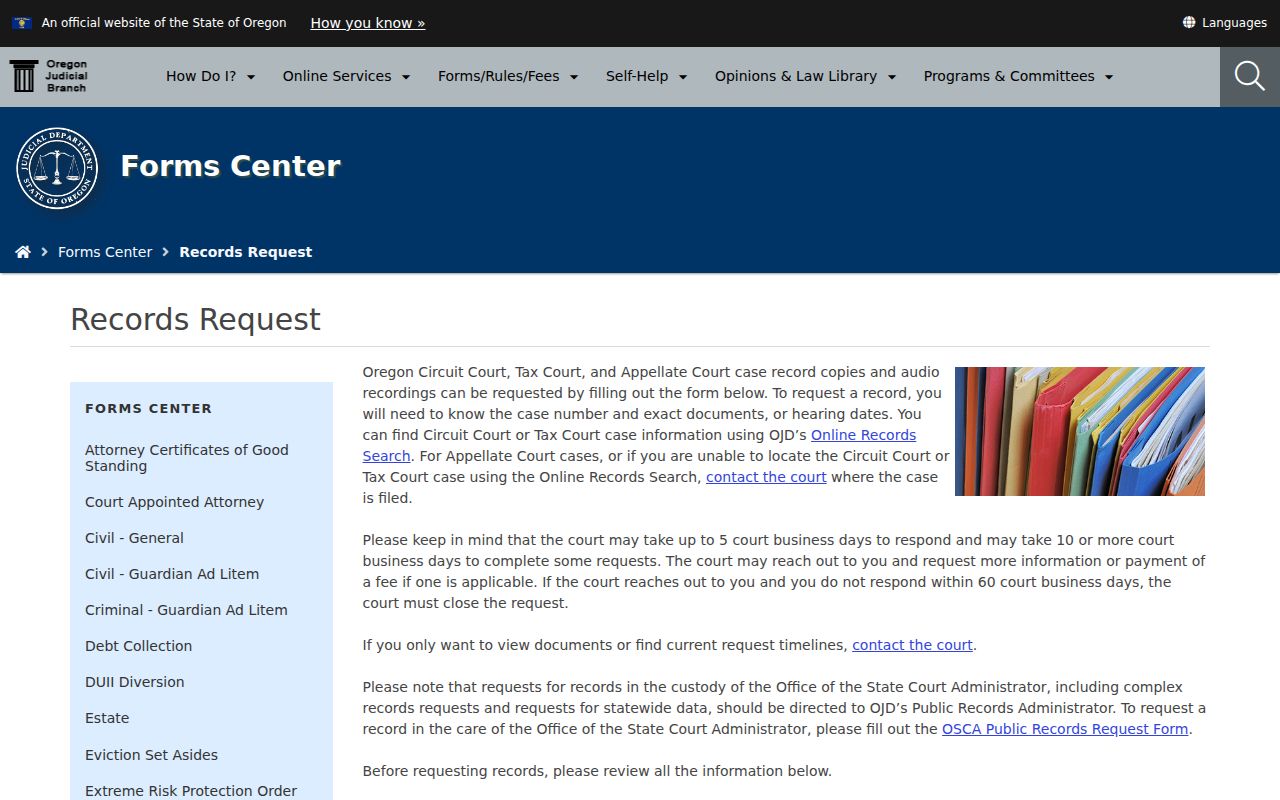
When the online screen stops at a case register, use the custodian’s request channel rather than guessing what an unshown document says. Oregon Judicial Department advises requesters to search first where possible, then give the case number and exact document or hearing date. A court may take up to five court business days to respond and ten or more court business days to complete some requests. It may seek clarification or payment, and an unanswered request can be closed after the stated 60-court-business-day period. Ashland city records have their separate municipal form and response practice.
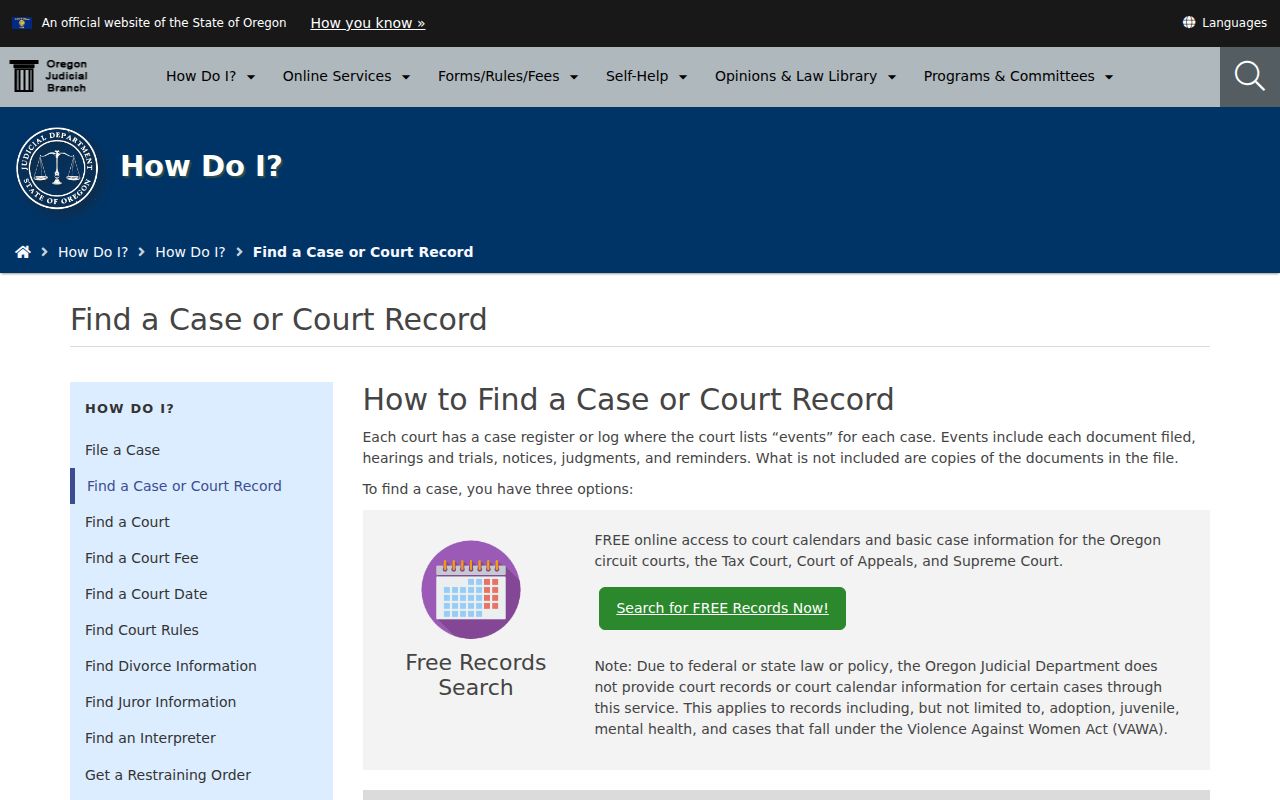
The OJD court-record guide lays out the free search, subscription, public-terminal, and clerk channels.
The OJD records-request page supplies the statewide request process for court documents.
Jackson County’s recorder, courts, elections office, and state agencies each control their own records. Oregon Public Records Law provides a request process for agency records, but its exemptions and redactions still apply.
Ashland Privacy Record Boundaries
Some records must stay private. Oregon excludes full birth dates, Social Security numbers, driver-license numbers, signatures, Address Confidentiality Program information, and protected voter addresses from the voter file. My Vote is a personal self-lookup, not an open name browser. Court records can be sealed or restricted, and local retention can remove old municipal material. DMV personal information is restricted. A property result can show an owner label and tax mailing information without showing who occupies a site. These limits are deliberate, not gaps to work around.
Oregon’s data-broker registry describes covered brokers’ opt-out methods, but an opt-out does not remove lawfully held records from government custodians. For a correction, contact the assessor, county elections, court clerk, OHA, or Secretary of State that maintains the record. A person with an immediate safety concern should consider the Oregon Address Confidentiality Program and appropriate official support.
Lawful use. Use Ashland record searches for personal, family-history, civic, or reconnection purposes. Oregon law does not allow public information to be used to stalk, harass, intimidate, or harm anyone.