
Ashland City Directory Holdings
The confirmed starting shelf is not a seamless annual run. The Southern Oregon Historical Society, or SOHS, Mega Index lists photocopies of Ashland City Directories for 1878, 1881, and 1886–87. A JCLS and SOHS board-packet account also reports a 1921 Ashland directory held in SOHS archives after library branches could not supply a 1920s Polk volume. Those are solid leads, not proof of a complete sequence, a publisher identity, or a last printed year. Ask the repository to inspect the title page and catalog for every additional volume.
| Directory source | Verified years | Research location | Access route |
|---|---|---|---|
| Ashland City Directories photocopies | 1878, 1881, 1886–87 | SOHS Mega Index and Research Library | Holding inquiry and in-person research |
| Ashland directory holding lead | 1921 | SOHS archives | Confirm title and availability with SOHS |
| Local-history support | Ongoing holdings | JCLS Ashland and Medford | Reference staff, card index, microfilm, and referrals |
| Historic surname indexes | Varies by Jackson record group | Oregon State Archives and OHRI | Online index, reference room, or research request |
The gaps matter as much as the titles. No source reviewed here verifies a continuous Ashland city-directory run, a local reverse-directory run, or complete publisher data. Treat a missing year as a research question, then use JCLS, SOHS, the State Archives, and the Rogue Valley Genealogical Society as separate channels rather than filling the gap by assumption.
Ashland City Directory Fragments
Those early SOHS years are unusually valuable because they begin close to Ashland's nineteenth-century growth, yet they should be cited precisely. Record the repository, the exact directory year, the page and column, and the title-page wording. The published item may list a household, a business, or both. It remains an annual commercial snapshot rather than a complete population roll.
The SOHS Mega Index is the source for the confirmed 1878, 1881, and 1886–87 holdings. Its catalog evidence is a good first step, but it does not expose a scanned entry page. That makes an on-site volume check especially important before copying an abbreviation, an address, or a relationship notation into a family record.
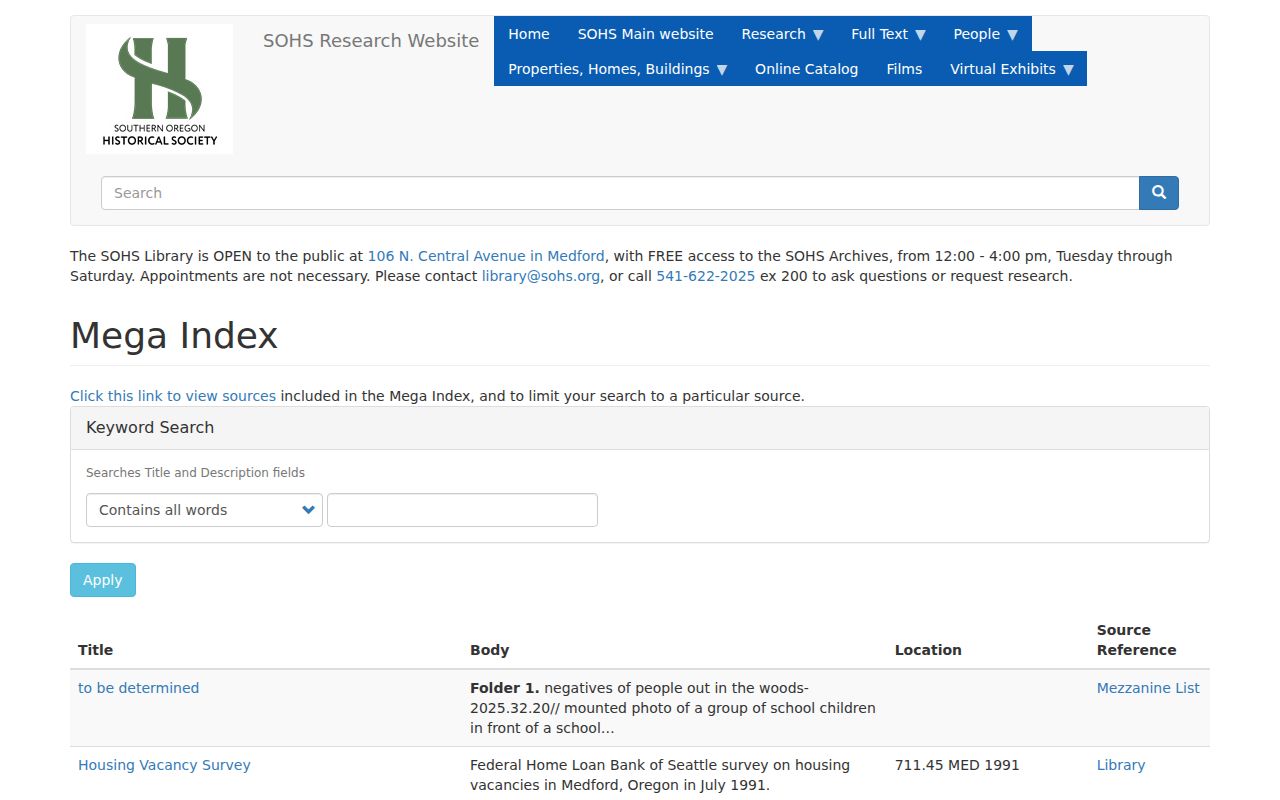
The index view supports a holdings request, while the physical copy supplies the text that must be transcribed exactly.
Note: SOHS confirms the listed years and the 1921 holding lead, not a continuous publication history between those dated pieces.
Ashland City Directory Research Desks
JCLS directs local researchers to the larger historical collections in Ashland and Medford and notes that older materials are not always online. Ask reference staff about city directories, reverse or criss-cross volumes, telephone books, yearbooks, local newspapers, obituary indexes, local-history card files, and microfilm. The Medford Local History Index is a physical card file that points to people, places, and events in books, magazines, and newspapers, including citations and page numbers.
The JCLS Local Research page also identifies the Oregon Cabinet, historical photographs, digital microfilm readers, and referrals to SOHS, RVGS, and the Southern Oregon Digital Archive. Microfilm readers in Medford can save or email images. A librarian can help identify a source trail, but the original page or record remains the item to cite.
SOHS adds local directories, family files, photographs, and vertical files. RVGS is named in the State Archives guide for historic death and marriage abstracts and indexes. Together, those repositories can connect a directory name to a dated marriage, death, estate, or cemetery trail without pretending that one shelf is a universal list of Ashland residents.
The archive route is especially useful when the directory years are uneven. The State Archives identifies a Jackson marriage series running from 1853 to 1970, county death material from 1904 to 1958, and historic probate and naturalization indexes. RVGS holds named historic death-certificate photocopies for 1904–1920, death abstracts for 1906–1926, and marriage abstracts for 1853–1924. Use an index or abstract to identify a date, certificate, or volume, then consult the relevant original custodian. A directory entry supplies a dated lead; it does not replace the event record.
OHRI offers another careful surname route. Its Jackson collections include delayed births, divorces, estates, guardianships, naturalizations, and probates, each with a separate date range and record count. The index was assembled from Archives holdings and preserves original spellings in volunteer transcriptions. Begin with a surname when practical, try variants, and avoid periods because the data-entry system discontinued them. A name match still needs the underlying record, date, and place checked before it is connected to an Ashland city directory entry.
Reading Ashland City Directory Entries
No reliable scanned Ashland entry was exposed during the research sweep, so the safest method is inspection, not a fabricated sample. Start with the volume's title page, publication year, publisher, and abbreviation key. Then copy the name format and initials exactly, along with any spouse or household notation, occupation or business notation, address, page, and column. Mark whether the volume distinguishes an owner, widow, boarder, or business listing, but do not assume a symbol until its printed key confirms it.
| Name form | Capture initials, spelling, and ordering exactly as printed. |
|---|---|
| Household notation | Record spouse, widow, boarder, or other notation only when the entry and key support it. |
| Business text | Preserve any listed business or commercial placement as a dated directory fact. |
| Address reference | Copy the residential or business address and the page and column for later comparison. |
| Volume context | Keep the year, publisher, title page, and abbreviation key with the transcription. |
- Criss-cross directory
- A directory section arranged by street or address rather than by personal name. A local continuous run was not verified, so ask for a specific volume.
- Householder index
- An index organized around household heads or addressable households. Its presence and scope must be checked in the actual book.
- Abbreviation key
- The volume's own explanation of shortened terms and symbols. Photograph or note it before interpreting any entry.
Note: The printed key, title page, and cited page control the interpretation of every abbreviated directory entry.
Ashland City Directory Title Pages
A title page does more than decorate a citation. It can settle the exact year, publisher, place of publication, and whether a book covers Ashland alone or a wider county area. It may also explain why one volume has a business section, a street section, or a different abbreviation system from another. That information should travel with each transcription.
A separate Ashland Archive Center search can help date city actions, newsletters, resolutions, and other civic events that appear beside a directory-era question. Archive results establish the date of an event or civic role, not a person's residence. Use the two sources as different evidence layers.
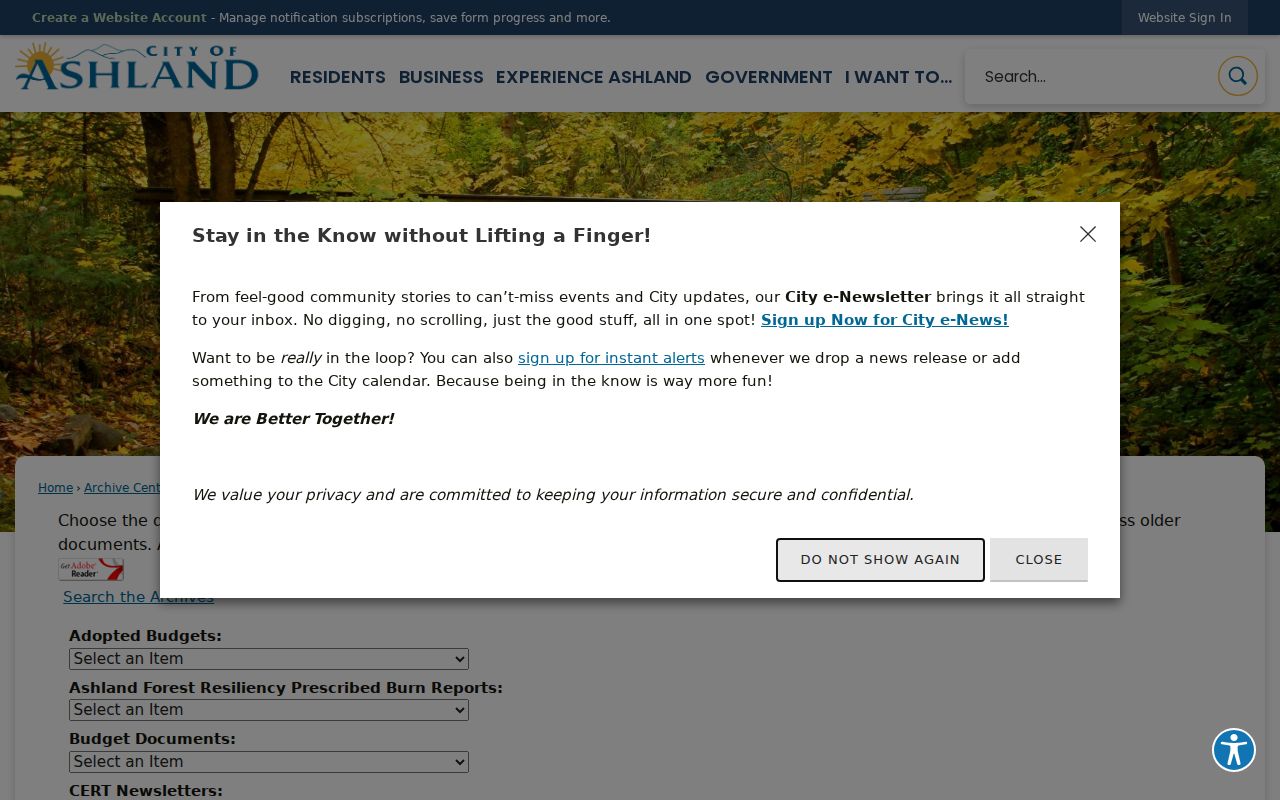
The city archive's keyword, archive, time-period, and date-range controls can place a directory-era event on a documented timeline.
Tracing Ashland City Directory Households
A household trail works best as a dated table, not a single conclusion. Begin with a confirmed directory volume and record each appearance, address, spouse notation, occupation, and page. Search nearby years and spelling variants. Next, compare a deed or tax-lot chronology for the property and use census data as a household snapshot on its own date. Federal census releases currently reach 1950, while a directory reflects its own publication cycle.
- Locate the first confirmed name form in an identified Ashland directory volume and save the citation details.
- Check nearby available directory years for address, spelling, spouse, and occupation changes.
- Ask JCLS or SOHS whether a relevant address or reverse section exists for the same period.
- Pair the dated directory finding with census, deed, tax-lot, newspaper, or obituary evidence that answers a different question.
- Use an OHRI surname search or an original custodian record when an event, estate, marriage, or death lead needs confirmation.
A name disappearing can mean a move, death, omission, changed spelling, or an unverified gap in the run. The answer comes from another dated source, not from the blank space alone. For current address-keyed records, use the Ashland street directory instead of stretching historic volumes past their purpose.
Ashland City Directories With Maps
Maps and directories answer different questions. The Library of Congress has an Ashland Sanborn Fire Insurance map record, and local preservation resources point to historic maps and surveys. A Sanborn sheet can show building footprint, material, use, street alignment, and sometimes street numbers. It cannot establish every person who lived at the property. Match the sheet date and legend before using it beside a directory entry.
The Oregon State Archives connects surname leads to historic record groups through the Oregon Historical Records Index. Its vital-records guidance distinguishes an index from an original record and keeps access restrictions in place. Search surname-only and try spelling variants because OHRI transcriptions preserve original spelling, then consult the named custodian for the underlying record when permitted.
Oregon State Archives vital-records research guidance describes the historical route and the access limits that remain around restricted records.
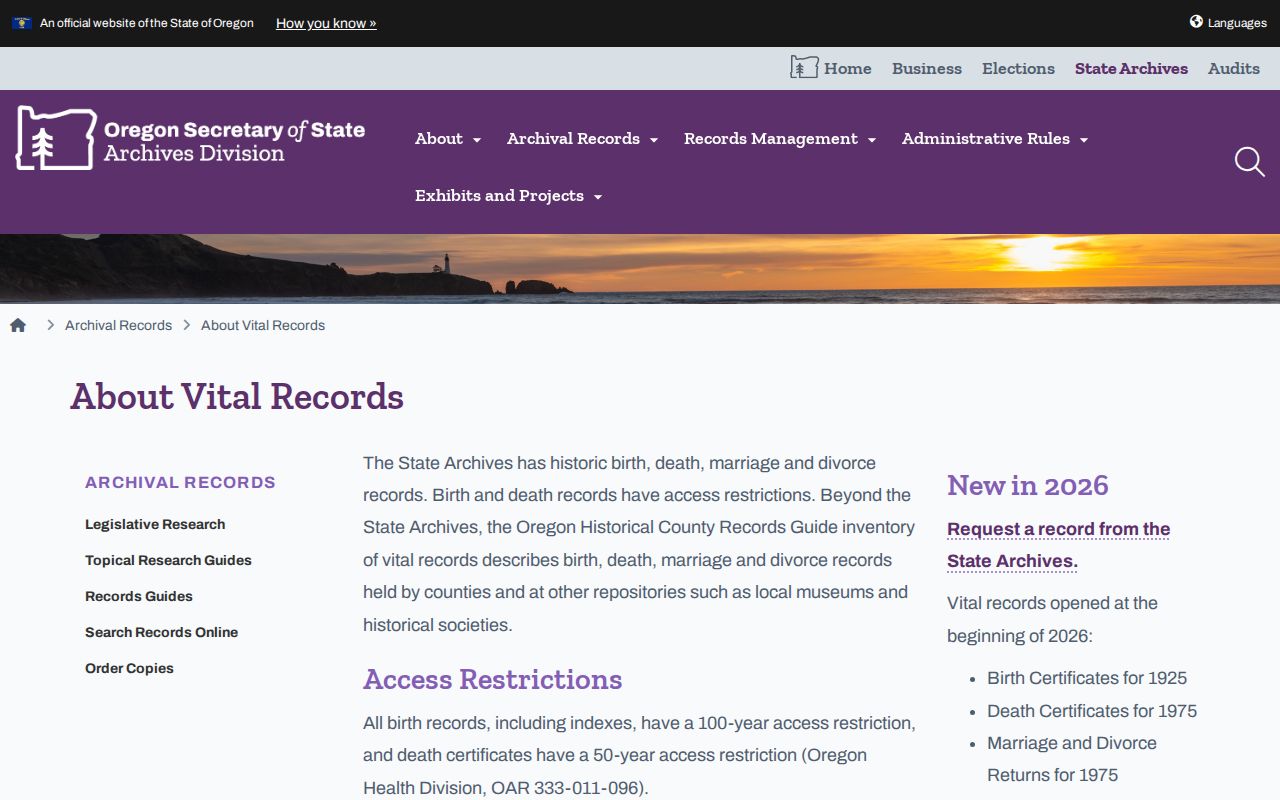
The State Archives guide is a bridge from a directory name to an appropriately requested historical event record, not a substitute for the original.
Ashland Cemetery Records Progress
A 2025 city accomplishment report says the City Recorder cleared a five-year cemetery-deed backlog and created a comprehensive cemetery-deed database. That makes cemetery-deed or plot information a stronger historical lead for an old family trail, especially when a directory disappearance is paired with an obituary, estate, or death record. It does not confirm that a public name-search screen exists, so ask the city about scope and access before relying on the database.
The City of Ashland cemeteries information identifies the city's three historical cemeteries, which date to the mid-1800s. Cemetery material can document a burial or deed/plot relationship; it does not by itself resolve a household's full address history.
Used with a dated directory entry and original records, cemetery information can help close a historical family timeline without turning a burial record into a current-person search.
Note: Preserve the source date, custodian, and page reference for each finding because the local directory run and related records overlap unevenly.